

Pelvic Pain
Our goal is not simply to manage symptoms, but to help you rebuild capacity, trust your body again and find the lifestyle you want to live.
Persistent pelvic pain can affect far more than the body alone. It can span from the physical like pelvic floor pain that affects intercourse, exercise and day-to-day movement to cognitive that impacts concentration and social interactions. Painful periods, and symptoms linked with conditions such as endometriosis, adenomyosis or PCOS echo far beyond menstruation into the rhythms of daily life. It can also affect how safe, confident, and connected you feel in your own body.
Pelvic pain is rarely just one thing
When pain becomes persistent, it can influence multiple systems at once. The sensations you feel are only one part of the picture. Over time, pelvic pain can affect the nervous system, tolerance to movement and load, energy levels, digestion, pelvic floor function and the ability to manage everyday activities.
It can also create secondary consequences. When symptoms are unpredictable as well as painful, it is natural to move less, avoid certain activities, brace against pain, or lose trust in your body. This can lead to wider deconditioning, reduced muscle strength, increased sensitivity, and a cycle where pain, protection and reduced capacity begin to reinforce each other.
A whole-system rehab plan
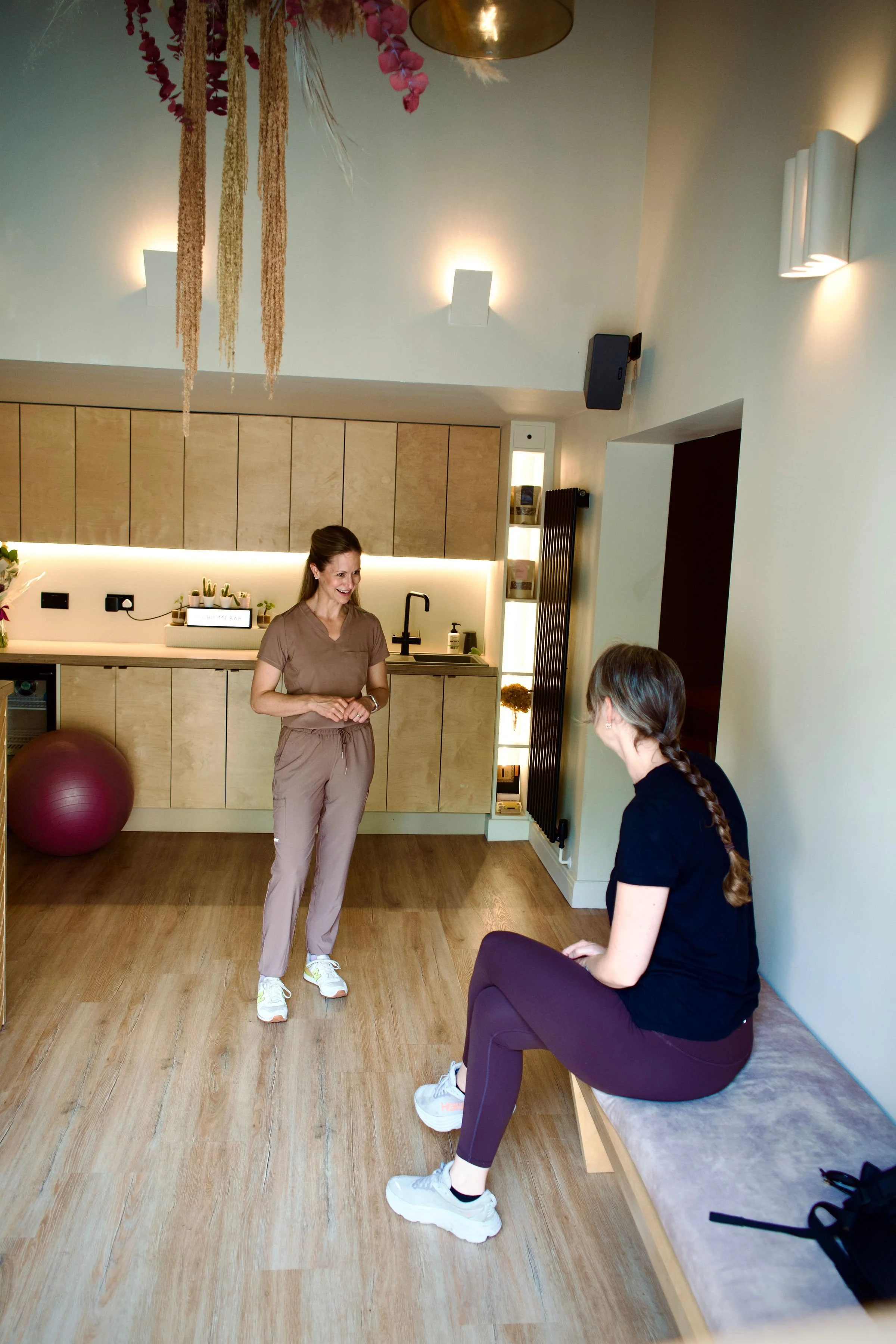
At The Pelvic Health Company, persistent pelvic pain rehabilitation is never unidimensional. Your plan is designed to address the different systems involved, from your nervous and muscular system to your pelvic floor, digestion, breathing patterns and whole-body movement capacity.
Just as importantly, your plan starts with understanding where you are now. We look at your symptom behaviour, pain patterns, flare-ups, triggers, protective strategies, and the activities that matter most to you. From there, we build a clear, practical recipe to help you move forwards with confidence.
We recognise that trauma can come in many forms when living with pelvic pain. This may include direct trauma, such as injury or abuse, or the trauma of navigating healthcare experiences where your symptoms have not been fully acknowledged, understood, or fully appreciated. Stories of delayed care and feeling misunderstood or lost in a system are sadly not unusual. Your assessment and treatment are always shaped with your past experiences in mind. Everything is taken at your pace, with clear consent throughout, and adapted around what feels safe, manageable, and appropriate for you. We offer a variety of assessment options, which may include internal pelvic floor examination where appropriate, alongside psychosocial, behavioural, movement, strength and whole-body assessment. Together, we decide what will work best for you.
Simple enough to follow, comprehensive enough to work
Persistent pain needs an approach that is easy to understand, realistic to implement and sustainable enough to stay consistent with. It also needs to be comprehensive enough to respect the complexity of your symptoms. Our aim is to help you understand what is happening, what influences your pain and what you can do to change the pattern over time.
This means combining education, coaching, manual therapy, exercise prescription, breath-work, nervous system retraining and pelvic floor rehabilitation in a way that tailors to you rather than demands of you.