
Prolapse Care
A Calm, Open Space to Talk About Prolapse
Prolapse is common, but it is not always openly talked about. That silence can leave people feeling alone, worried, or unsure what they are allowed to do. Our service offers a calm, respectful space to ask questions, understand your body and build a practical route forward. We take current research, a personalised pelvic and whole body assessment to build a route forwards. Whether you are newly diagnosed, managing long-term symptoms, returning to exercise, navigating postnatal recovery, or exploring pessary support, we will help you feel more informed, more capable, and more confident in your next steps. Our goal for you is to move with confidence and live with ease.
Pelvic organ prolapse can feel unsettling, confusing and deeply personal. It is often described as a heaviness, dragging, pressure or bulging sensation, but it is more than a mechanical change in the body. Prolapse can also be a sensory condition: the way it feels can create fear, distress, avoidance and a loss of trust in your body. Many people arrive having been told to “just do pelvic floor exercises” or avoid activities like lifting and hobbies or sports, when what they really need is to feel understood, get clarity and have a plan that looks at the whole picture.
Our prolapse rehabilitation service is designed to help you understand what is happening, why your symptoms may be showing up, and what can be changed. We assess not only the type and stage of prolapse, but also the sometimes hidden drivers that can become game changers in rehab — including breathing, pressure management, bowel habits, movement patterns, strength, coordination and how your body manages everyday load.
Prolapse Physiotherapy Rehab
Your Prolapse Rehab Journey
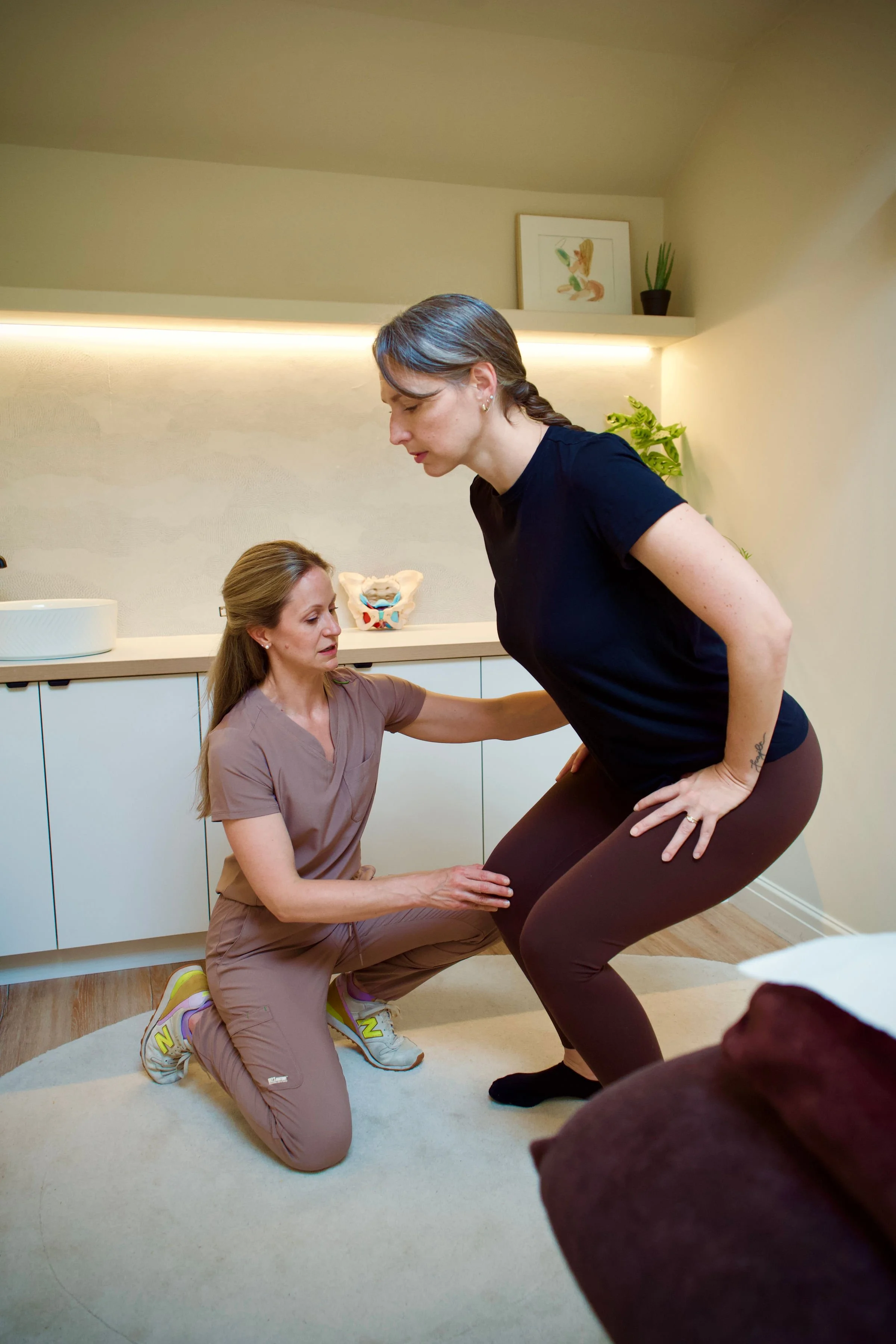
Your journey begins with a detailed initial assessment. We take time to listen to your symptoms, your goals and the activities that matter to you. We explore how your prolapse affects your daily life, exercise, intimacy, work, parenting, confidence, and sense of safety in your body. From there, we assess the pelvic floor alongside the rest of your body, so your plan is based on how you move, breathe, load and coordinate — not just on a diagnosis.
Because prolapse symptoms are often influenced by more than one factor, we look closely at the drivers behind the pressure. Poor pressure control can be driven by different issues from constipation, straining, gut mechanics, diaphragm function, bracing, inefficient lifting strategies, reduced activity level, strength deficits or coordination challenges. Each person has their own unique combination in their symptoms and so their rehab too. Addressing these can make rehab more effective and help you feel more confident in daily life. This may include:
Pelvic floor assessment and tailored pelvic floor training
Breathing and pressure management strategies
Gut support with constipation, straining, and bowel habits
Movement, lifting, and exercise modifications
Strength, coordination, and full-body mechanics
Coaching and education to reduce fear and avoidance
A personalised plan that supports your unique symptoms, goals and lifestyle
Pessary Fitting
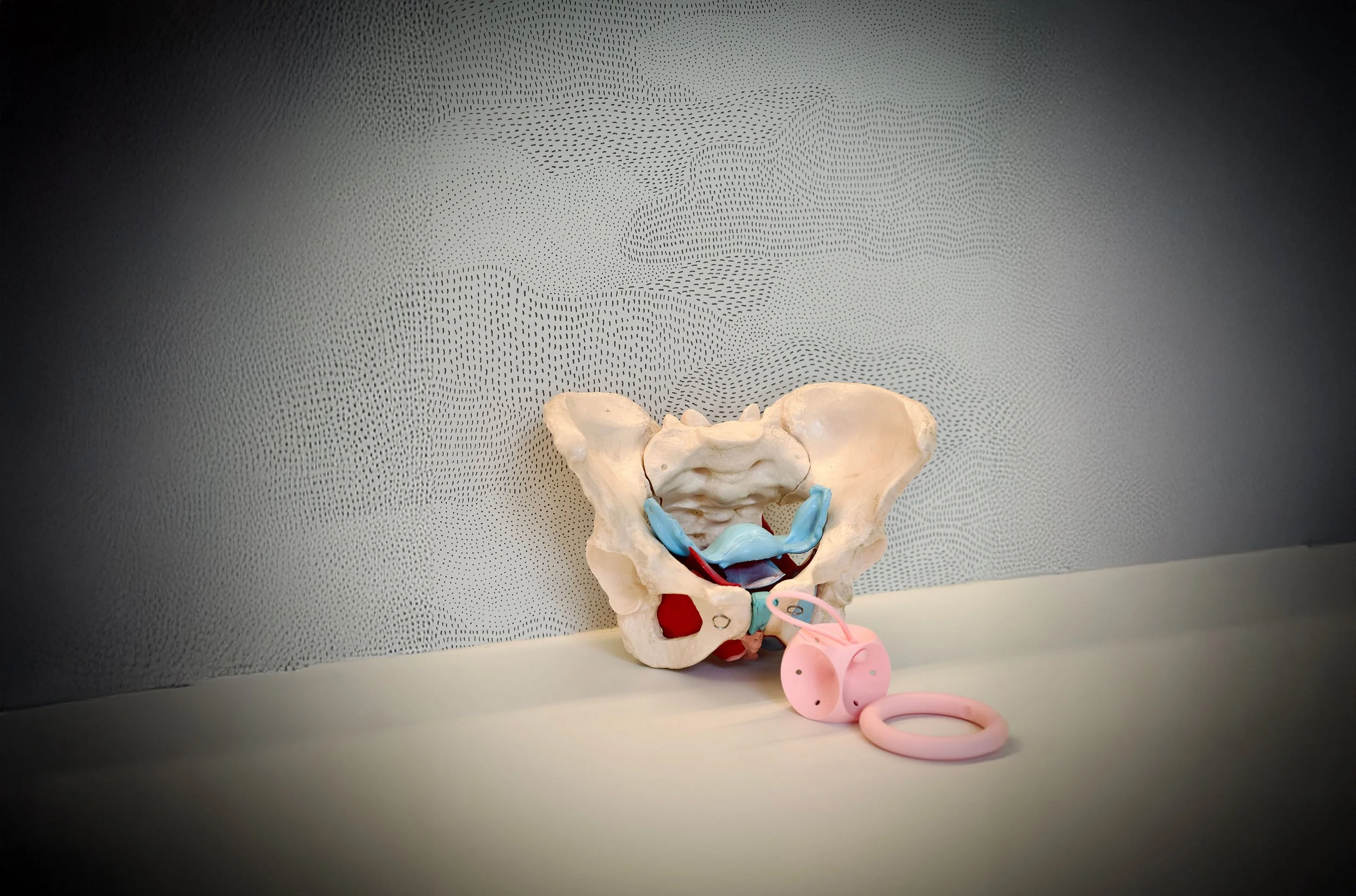
Pessary fitting is a separate but complementary service that may follow on from prolapse rehab care. A vaginal pessary is a removable support device used to help reduce prolapse symptoms and support the vaginal walls or uterus. It can be a helpful non-surgical option for many people, either short term or long term, depending on symptoms, lifestyle and preferences.
During your pessary fitting appointment, we assess whether a pessary is suitable for you, discuss the options available, and work to find the best type and size for you and your needs. The goal is not only to help you find the right pessary, but to make sure you leave feeling informed, reassured, and confident in managing it safely and comfortably.
If you are ready to move forwards you can book your appointment now or request a call to learn more.