

Pelvic Health Physiotherapy for
Pelvic Floor Dysfunction
Whilst Pelvic floor dysfunction is thought to affect 1 in 5 women, that does not make it something you live with. Pelvic floor dysfunction can affect bladder control, bowel function, pelvic organ support, and pelvic floor comfort. Symptoms may include leaking when you cough, sneeze, laugh or exercise; rushing to the toilet; needing to go more often; difficulty fully emptying your bladder or bowel; a sensation of heaviness or dragging; constipation or straining; pelvic pain; or discomfort that affects everyday life.
These symptoms can happen at any stage of life. They may be linked to changes in strength, tension, coordination, breathing, movement, habits, or from the impact of surgery, pregnancy, birth, menopause, sport, stress, as well as other health factors.
What to expect from your assessment
Your initial assessment is designed to build a full picture of your pelvic health. We will take time to understand your symptoms, medical history, lifestyle, bladder and bowel habits, pelvic organ function, pelvic floor function, movement, strength and the factors that may be influencing how you feel.
This comprehensive approach means your treatment plan is specific to your needs. Rather than guessing or offering generic pelvic floor training, we will identify what is most relevant for you so your time is well spent working towards meaningful change as fully and efficiently as possible.
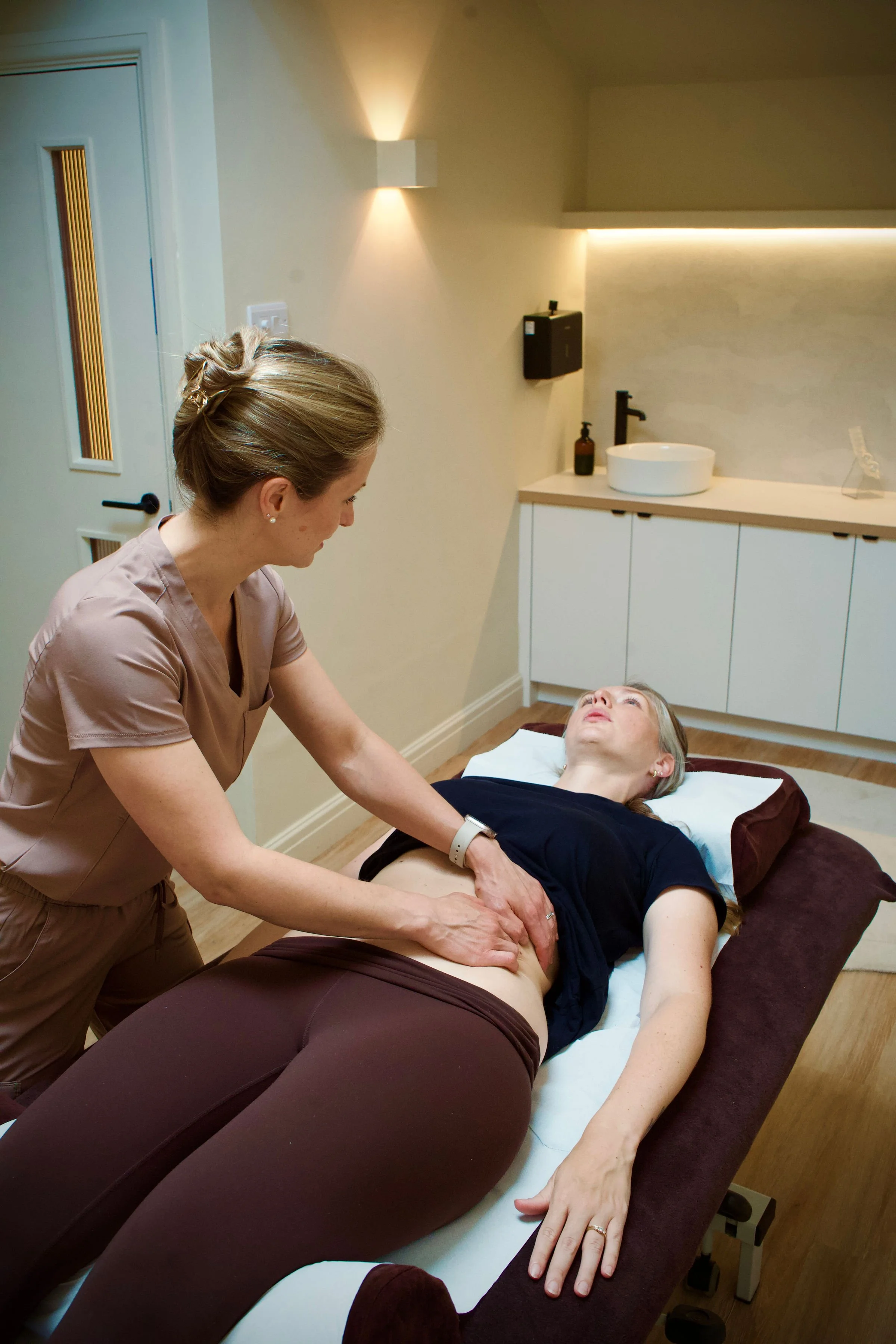
Pelvic floor assessment: always with your consent
A pelvic floor assessment can be an important part of understanding how your muscles are working, including their strength, relaxation, coordination and any areas of pain or sensitivity. However, it is not compulsory. You will always be given clear information, time to ask questions and the choice to consent, pause or decline.
If you have experienced unwanted touch, trauma, pain with examinations, or feel anxious about this part of assessment, please let us know if and when you feel comfortable to do this. We will always consider your experiences, preferences and boundaries as part of your care.
A whole-body approach to pelvic health
The pelvic floor does not work in isolation. It works with your breathing, abdomen, hips, spine, posture, movement patterns and daily activities. That is why we take a full-body approach, considering how your pelvic floor works with the wider mechanics of your body.
Your treatment may include a tailored pelvic floor rehabilitation programme, bladder or bowel retraining, breathing and relaxation strategies, hip or core assessment, strength and conditioning for the whole body, manual therapy for pelvic pain or muscle tension, and practical advice around habits, movement, exercise and lifestyle.
Where appropriate, we may also discuss adjuncts such as internal supports, biofeedback or muscle stimulation. These options are always considered carefully and only recommended when they are suitable for your symptoms, goals and preferences.
Skills you can use at home
Our aim is to help you understand your body and feel confident managing your symptoms. We will teach you the exercises, techniques and strategies that are most relevant to you, so you can use them at home and continue making progress between appointments.
If pelvic floor symptoms are affecting your confidence, comfort, exercise, work, relationships or daily life, you do not have to work it out alone. Pelvic health physiotherapy offers a supportive, individualised way to understand what is happening and take practical steps towards feeling better.
If you are ready to move forwards you can book your appointment now or request a call to learn more.